VI · On growing through the cracks · Product design
Grow Through the Cracks
The brief
Create a lamp brand built around a theme or story. The team chose Studio Kintsu, inspired by Kintsugi, the Japanese art of repairing broken pottery with gold. The idea: a piece is more beautiful for having been broken.
The brand explores beauty through imperfection, repair, and rebirth. Each team member designed one lamp that tells part of that story.
What I did
Designed “Grow Through the Cracks,” a lamp that reimagines Kintsugi as a story of growth.
Idea explanation
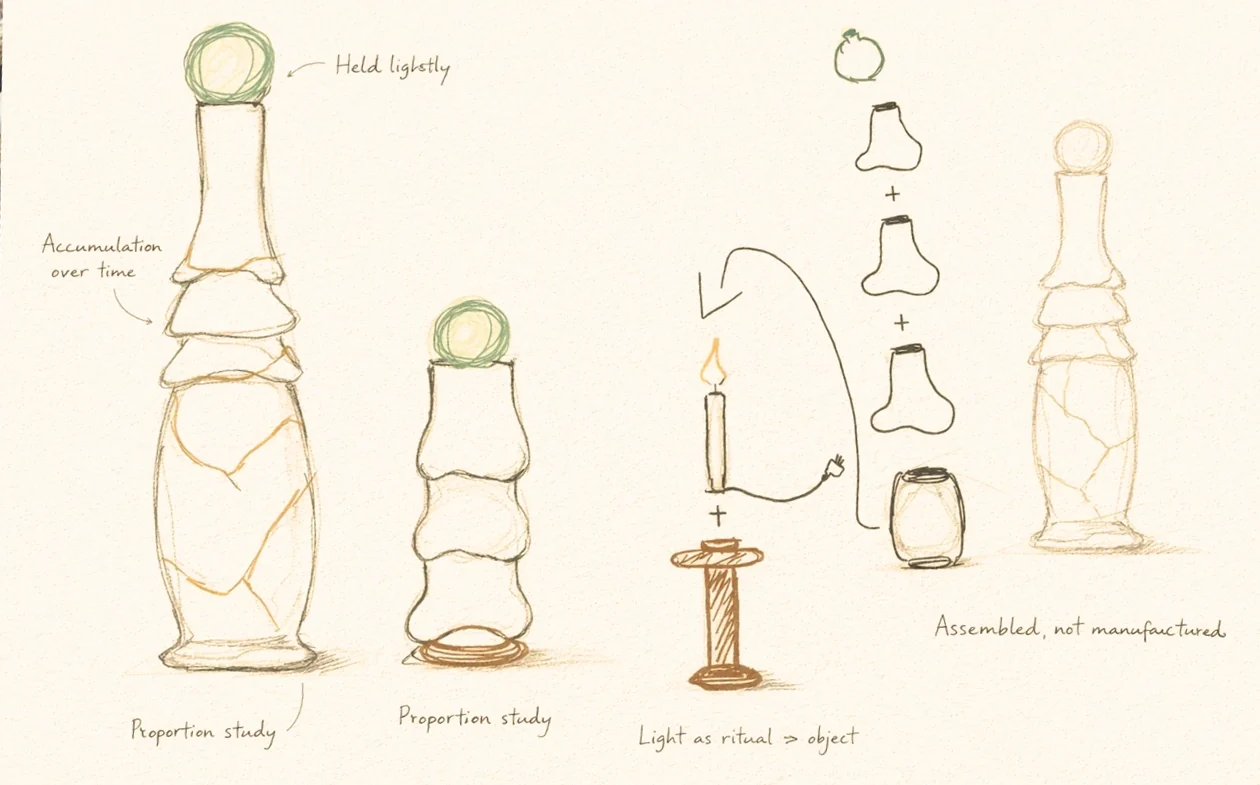
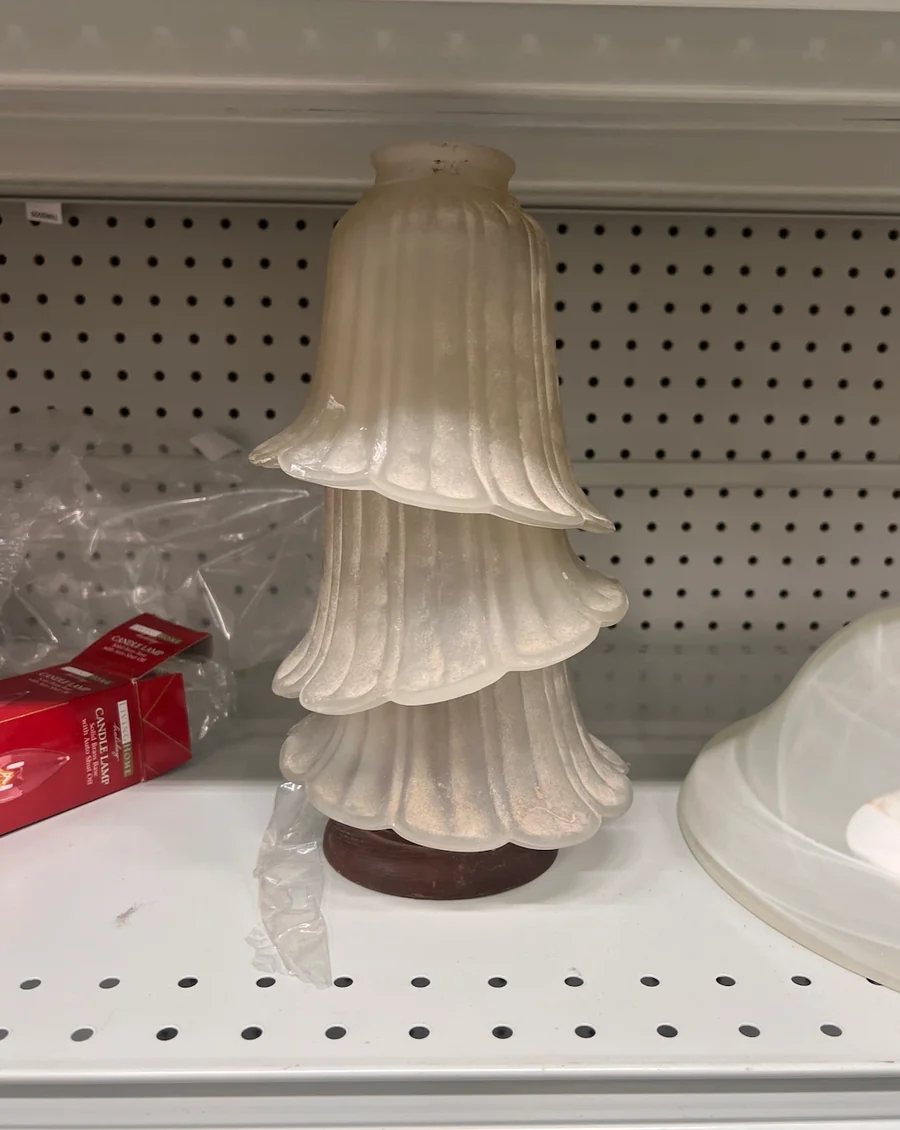
Floral, biomorphic elements, symbolizing growth, rise from a ceramic base marked by gold fractures. The lamp follows with three floral-shaped lampshades stacked on top of one another, with a spherical topper. The topper represents a “seed,” the moment where the cracks have grown, and rebirth into something new.
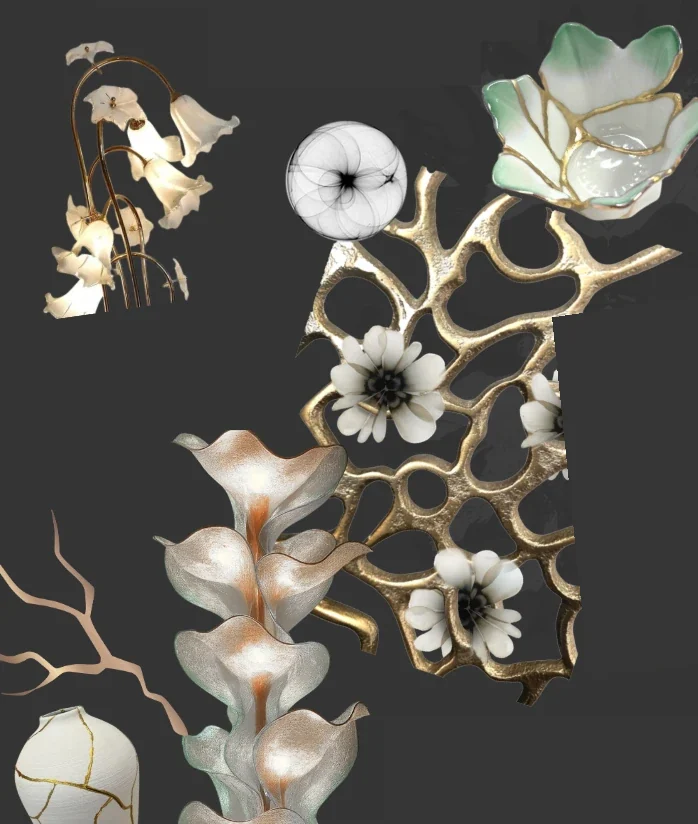
The design, bottom to top
- Ceramic base with gold fractures: the break, and the repair
- Three stacked floral shades: growth rising out of the cracks
- Spherical topper: the “seed,” a rebirth into something new
The solution
Product story
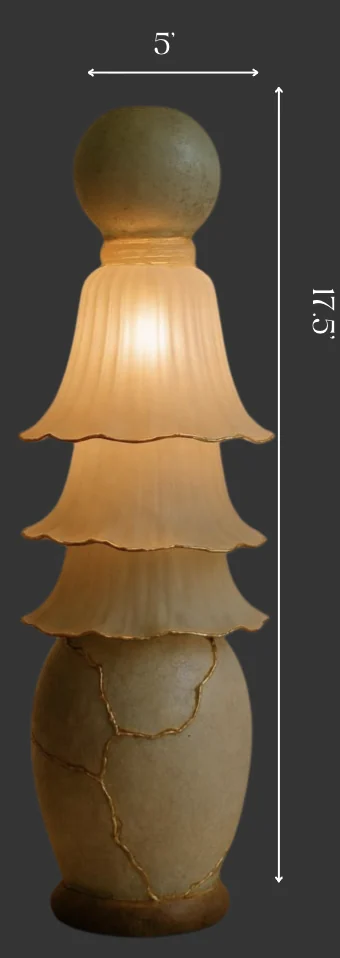
The experience of the lamp is meant to feel hopeful and reassuring. Organic forms and softened light suggest growth emerging after rupture, creating a sense of life continuing rather than being interrupted. Through its gentle presence, the lamp invites users to see repair as a more human way of living. This lamp reinterprets kintsugi as a process of growth, where repair becomes the starting point for new form, rather than treating damage as an ending.
The brand fit: it pushes Studio Kintsu’s idea one step further, from healing to growing.