I · On going deeper · Hospitality
Matter of Form
The brief
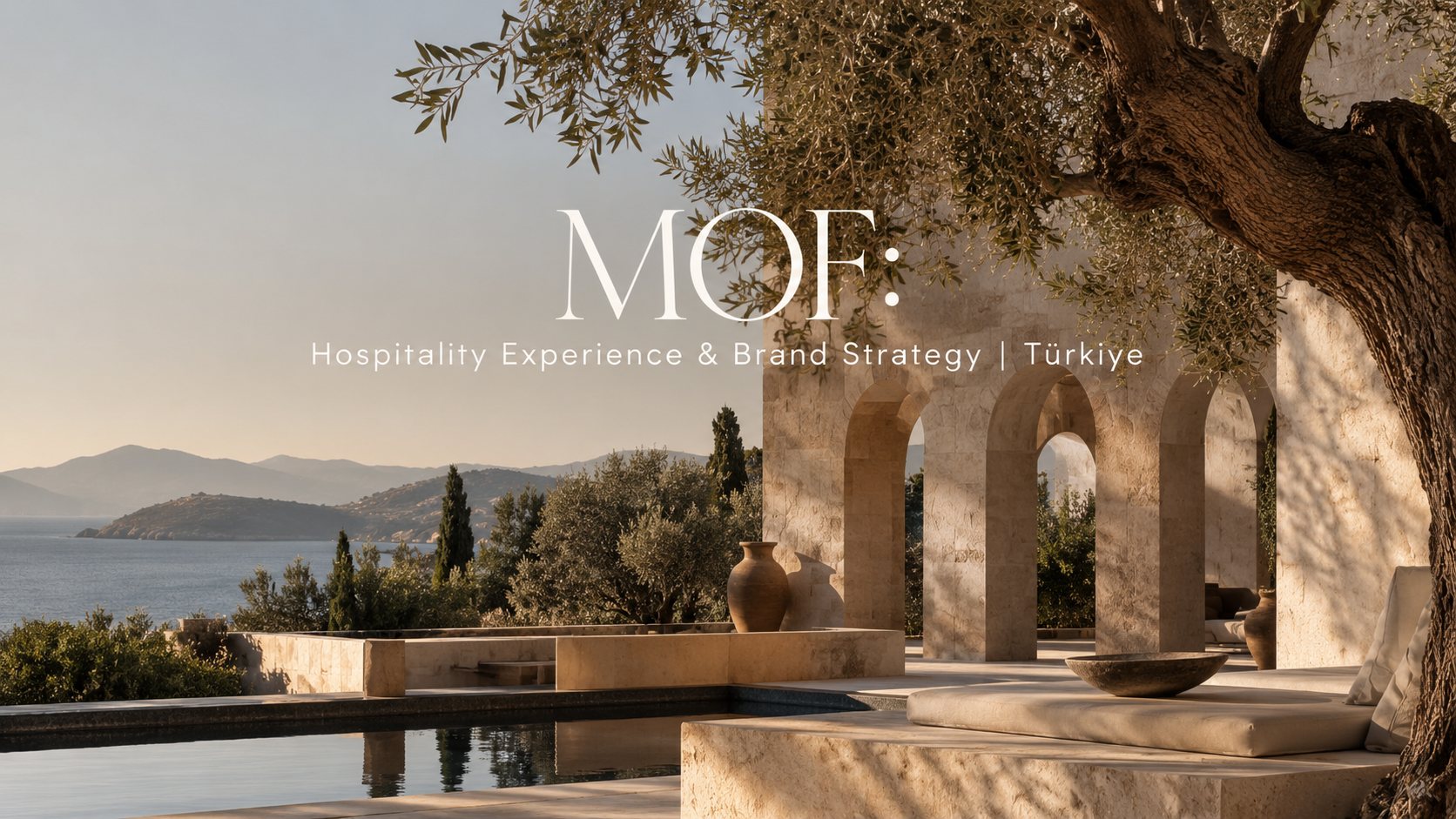
The challenge was to develop a new ultra-luxury hospitality brand that evolves the experience of a Turkish resort beyond the traditional scale and standardization of an all-inclusive model. I opted to create a vision of Mediterranean luxury living that felt more emotionally resonant, clear, and credible to a global audience.
What I did
I developed a new positioning for the brand: Turkish Culture, Woven In. I built it on three foundations:
01
Background
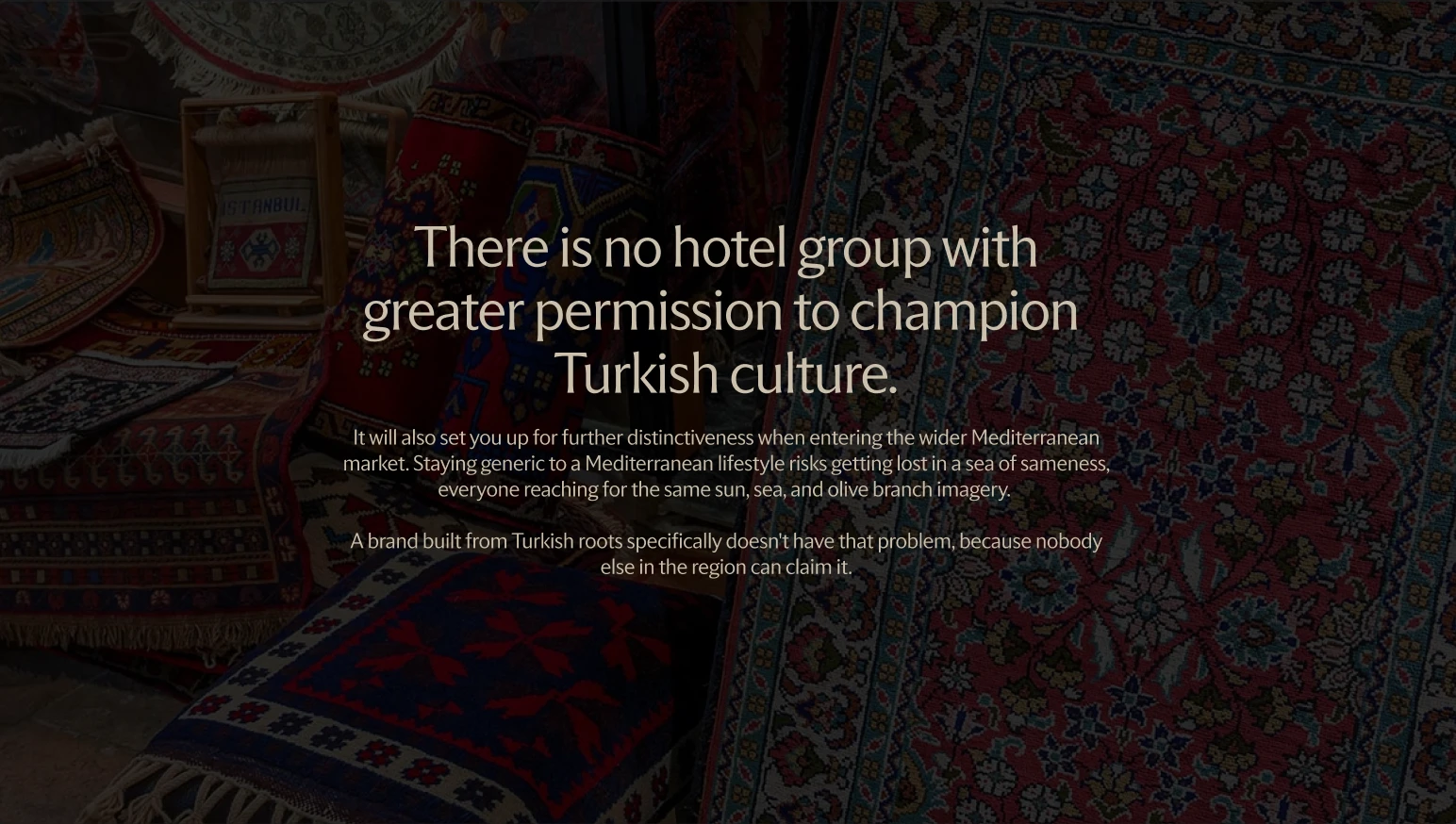
- The family behind the brand started as a textile company (Ozak Textile, founded 1985).
- Turkish craft and heritage was already in their DNA before they ever opened a hotel.
- They have a unique insight and opportunity to champion Turkish culture in a way that their competitors do not.
02
Audience insight
- Luxury travelers want authentic, local experiences, not tourist attractions.
- The new luxury isn’t “more to do.” It’s more to connect with.
- Turkey ranks second only to China for living cultural heritage (UNESCO), so the material is already there.
03
Categorization
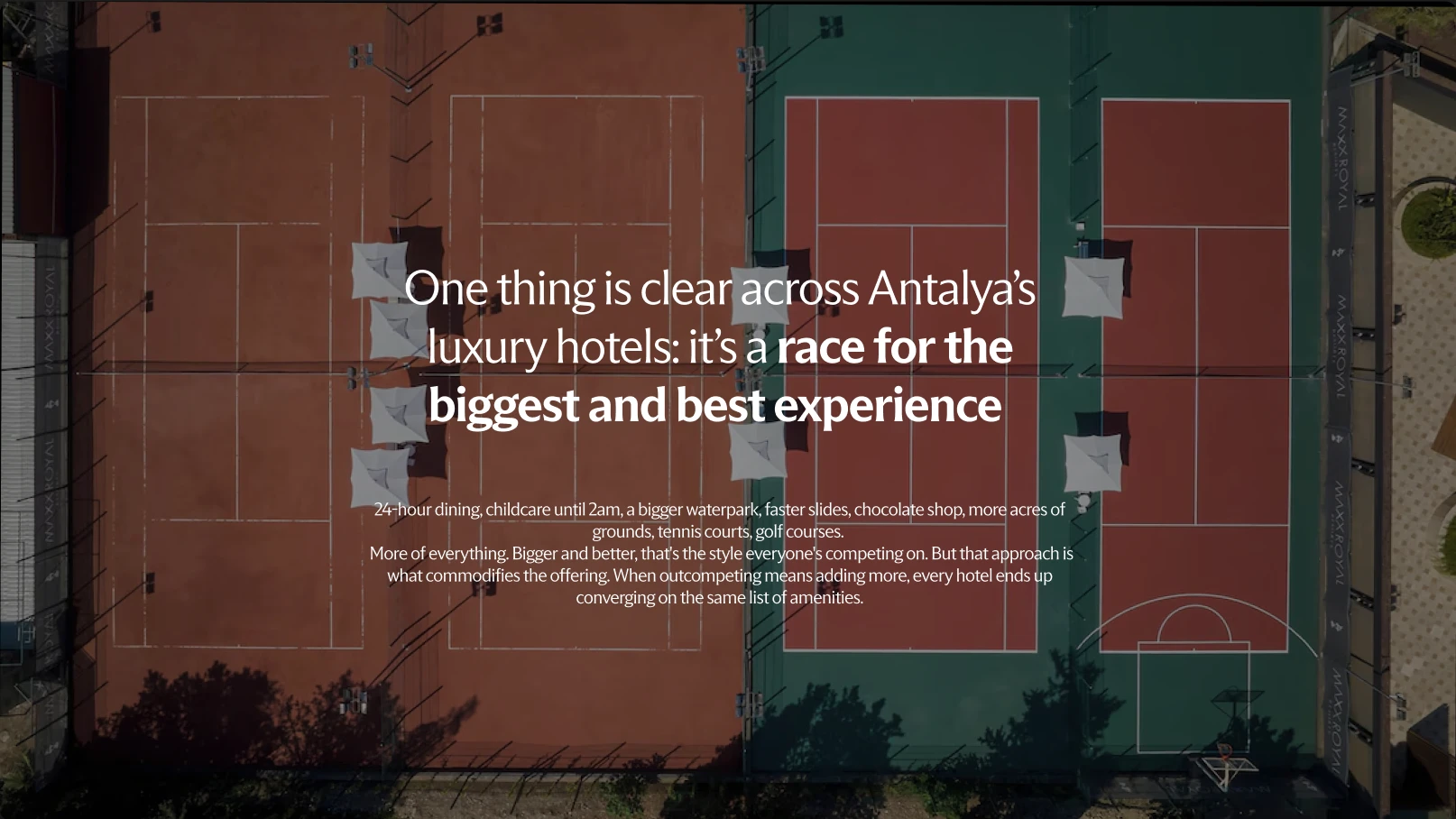
- Antalya is crowded with big, all-inclusive, family-focused resorts.
- Hotels compete by adding more: bigger waterparks, 24-hour dining, golf courses, etc.
- These amenities get duplicated quickly, so every hotel ends up looking the same.
The solution
I proposed positioning the hotel as the considered luxury Turkish hotel group.
- Hospitality rooted in Tanrı Misafiri. Each guest is welcomed as a blessing, not a booking. That warmth sets it apart from Swiss precision or American efficiency.
- Culture as the experience. Historic rituals and living traditions like Turkish coffee reading replace generic resort entertainment.
- A brand that travels. Turkish roots keep the hotel distinct as it grows into the wider Mediterranean, where everyone else reaches for the same sun, sea, and olive branch imagery.